17.3

May. 2nd, 2026 06:00 pm
ccpro: (Default)
[personal profile] ccpro
Wisconsin road adds a decimal point to its speed limit. It’s not a joke

A Wisconsin road has added a decimal point to its speed limit — in the hope that the unusual traffic sign will give drivers’ second thoughts about putting the pedal to the metal

и к этому привыкнут
[syndicated profile] reclaimthenet_feed

Posted by Ken Macon

Young woman standing before a giant smartphone screen showing a single green eye, bright yellow background.

This Post is for Paid Supporters

Reclaim your digital freedom. Get the latest on censorship and surveillance, and learn how to fight back.

Already a supporter? Sign In.

(If you’re already logged in but still seeing this, refresh this page to show the post.)

The post The Browser Habits That Secretly Raise Your Airfare, and the Ones That Don’t appeared first on Reclaim The Net.

По поводу

May. 3rd, 2026 05:40 am
rotbar: (Default)
[personal profile] rotbar
Как известно, царь Тубус, объявил об окончании войны с Вавилоном. Увенчает-ли царь её завершение триумфом- вопрос открытый. Но по очкам выигрыш остался за персами, которые хоть и не получили дани с парфян, однако-ж пролив как был перегорожен цепями- так и остаётся.
Итогом посольства к парфянам царя британских пиктов- пока еще не стал роспуск союза Атлантикуса и Северных племён, но отзыв 15 тысяч парфянских воинов из германских земель.

[syndicated profile] birdwatcher_feed
Стоило только Трампу просрать войну с Ираном, и вот пожалуйста:
Editorial Board@nypost.com -- America needs the full truth on Fauci’s coverups and ALL federal pandemic abuses.
Вчера было рано, завтра будет поздно.
birdwatcher: (belgium fries)
[personal profile] birdwatcher
Стоило только Трампу просрать войну с Ираном, и вот пожалуйста:
Editorial Board@nypost.com -- America needs the full truth on Fauci’s coverups and ALL federal pandemic abuses.
Вчера было рано, завтра будет поздно.

(no subject)

May. 2nd, 2026 05:15 pm
ya_miranda: (Default)
[personal profile] ya_miranda
Что-то это все такое... типа, погуляла, убирайся обратно в свой маленький мир
(хотя, конечно, это все глупости в голову лезут, мало ли какой бывает у людей перерыв в биографии). Но голова пока не варит даже на базовые вопросы. Только музыка хорошо идет)

Art for the artless

May. 2nd, 2026 06:08 pm
rolanni: (Default)
[personal profile] rolanni

I mentioned that today I bought a coloring book. In particular, I bought Urban Anna's From Paris With Love, featuring 21 shopfronts to color in. What attracted me to this is that the complete artwork is on the page facing the page to be colored, where the colorist is free to either ignore or emulate. For my first attempt, I have decided to emulate, and I've spent the last, oh, hour? going through the . . . hundreds of colored pencils in this house in order to arrive at the closest approximation I can manage of the colors used by the artist.

Yes, this is fun; I have a Weird Brain. I believe I may be learning something about color, though I don't really have a clue what that might be -- my brain rarely shares stuff with me. But as of this moment I have a key listing 20 colors, that ends with the following note: "color list incomplete." Because, yanno, I have enough colors to get started coloring, and I can get back to matching later.

Ah. And my brain has just now informed me that no, I never AM going to match the color of the stucco wall because the original work was done on pebbly art paper and the book is printed on smooth paper. Well, there.

Anyhow, tonight, I intend to serve up Coon Cat Happy Hour, pour a glass of wine, and color. I've never done such a thing, but maybe I'll put on a movie down low, so there will be voices in the background. That seems like a Thing that ought to be tried.

Tomorrow! I will do my very best to get the Fae Duology uploaded, formatted, and tagged with a preorder date.

Everybody have a good evening. Stay safe. I'll check in tomorrow.

Below is my coloring project:


о как!

May. 2nd, 2026 03:00 pm
ccpro: (Default)
[personal profile] ccpro
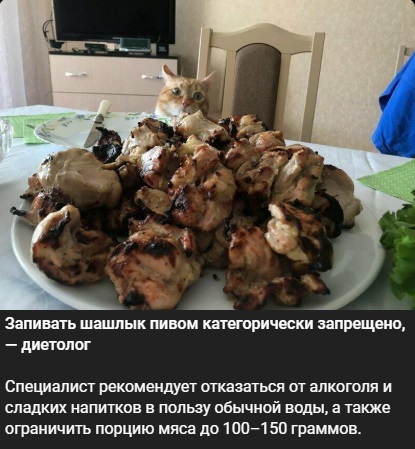
всё это в корне неверно. мы не запиваем шашлык пивом. мы заедаем пиво шашлыком. а диетологов таких надо гнать взашей

[syndicated profile] reclaimthenet_feed

Posted by Cindy Harper

If you're tired of censorship and dystopian threats against civil liberties, subscribe to Reclaim The Net.

Canada’s federal government is being asked to scrap Bill C-22 by a coalition that has grown to include 30 organizations and more than 20 cybersecurity experts.

The open letter, published by the Global Encryption Coalition on April 28, 2026, lands one week after a separate group of 14 civil liberties organizations, refugee advocates, academics, and 15 of Canada’s most prominent privacy scholars sent their own demand for full withdrawal to Prime Minister Mark Carney and every Member of Parliament.

The bill forces “electronic service providers” to install “technical capabilities” that hand law enforcement access to Canadian communications and sensitive data on demand.

The signatories of the open letter want the legislation pulled, not amended, because Part 2 of the bill, the so-called Supporting Authorized Access to Information Act, cannot be fixed without abandoning its core purpose.

That core purpose is breaking encryption. The signatories put the technical reality plainly. “There is no way to provide backdoor access to encrypted data and communications without compromising the privacy and security of millions of law-abiding citizens,” the letter states.

The signatories include Jon Callas of Indiana University, John Gilmore who co-founded the Electronic Frontier Foundation, Susan Landau of Tufts University, and Eugene H. Spafford of Purdue, alongside organizations such as the Internet Society, the Tor Project, Tuta, OpenMedia, the Center for Democracy & Technology, and Fight for the Future.

The Canadian government’s framing leans hard on a familiar reassurance. Public Safety Minister Gary Anandasangaree told an audience of police chiefs and law enforcement officials in March that the bill targets criminals, not ordinary citizens. “I want to be very clear about what C-22 is not. It is not about the surveillance of honest, hard-working Canadians going on about their daily lives,” Anandasangaree said.

He added moments later, “We’re not looking for sneaky ways to surveil Canadians. We are doing our part to combat bad actors in both the physical and digital worlds.”

What the minister described, however he labelled it, is a surveillance bill.

C-22 compels electronic service providers to retain Canadian metadata for a year and gives police and CSIS new mechanisms to retrieve it. Location data, device identifiers, daily movement patterns. All of it is warehoused in advance, on every Canadian, regardless of whether anyone is suspected of anything.

Location data alone tells a detailed life story: where someone sleeps, which doctor they see, which protests they attend, which church they walk into on a given day. Twelve months of that, sitting on private servers, organized for retrieval by the state.

The bill does retreat from its predecessor. Bill C-2, which collapsed last year under opposition from rights groups, opposition parties, and industry, would have allowed police to ask any service provider, including those bound by professional privilege, whether someone was a client and where they connected from, all without a warrant. C-22 narrows that warrantless inquiry to telecommunications companies, and limits the question to a yes-or-no on client status. Anything further requires a warrant.

Anandasangaree acknowledged the climbdown directly. “One thing I’ve learned is that at times when more work needs to be done on a particular bill, you retreat and you come back. You come back with better consensus, better consultation, and better supports from across the board,” he said.

The retreat is a concession. The premise is not. Companies still have to pre-organize sensitive data on every Canadian on behalf of the state, and the bill’s most concerning section authorizes the Minister of Public Safety to issue secret orders forcing designated “core” electronic service providers, a category the government has not bothered to fully define, to build and maintain surveillance capabilities. The companies that receive these orders cannot tell anyone they received them.

The government has written in a restriction saying the capabilities cannot create systemic vulnerabilities or weaken encryption, but that restriction is written by the same government that issues the secret orders, with no public accountability for how it gets applied.

The open letter notes that those supposed protections are flimsy on their own terms. “Systemic vulnerability” is vaguely defined in the bill and “encryption” is not defined at all.

The Governor in Council has wide remit to alter definitions and processes inside Part 2 after the fact, and the government has already admitted, on the record, that it is open to expanding C-22’s powers. Limited safeguards on a piece of surveillance legislation are not really safeguards if the people writing them say openly that they want them broader.

The cybersecurity argument against backdoors has not changed in 30 years. Encryption is mathematics. It works for everyone or it works for no one. A backdoor that only the good guys can use does not exist and the people who keep insisting it must be possible are making a political argument dressed in technical language.

The signatories point to recent history to show what happens when governments mandate access.

If you're tired of censorship and dystopian threats against civil liberties, subscribe to Reclaim The Net.

The post Cybersecurity Experts Demand Canada Scrap Bill C-22 Backdoor appeared first on Reclaim The Net.

[syndicated profile] reclaimthenet_feed

Posted by Dan Frieth

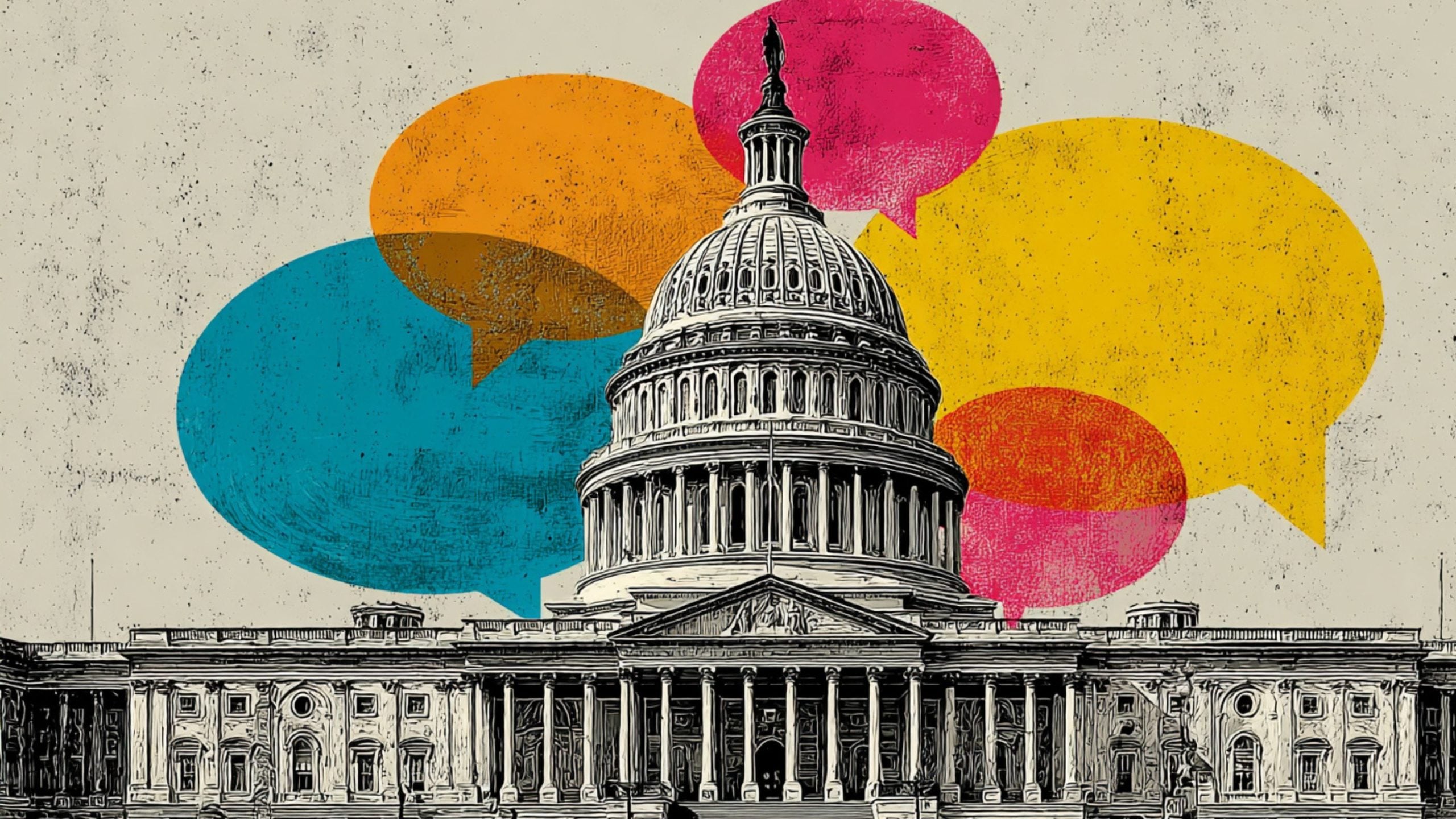
Black-and-white sketch of the U.S. Capitol dome and facade with overlapping colorful speech bubbles (teal, orange, pink, yellow) behind it.

If you're tired of censorship and dystopian threats against civil liberties, subscribe to Reclaim The Net.

A new House appropriations bill does something unusual for Washington legislation. It tells federal agencies they cannot spend money pressuring platforms, advertisers, or foreign governments to silence speech that Americans are legally allowed to make.

H.R. 8595, the national security and State Department appropriations bill, runs hundreds of pages and buried throughout are provisions that would shut off federal funding to a wide range of speech-suppression activities.

The restrictions cover direct platform pressure, ad boycott campaigns aimed at US media companies, blacklists, and cooperation with foreign censorship regimes that target American tech firms.

We obtained a copy of the bill for you here.

What the Bill Actually Stops

The headline provision is on page 252. It bars the use of any appropriated funds to “deplatform, deboost, demonetize, suppress, or otherwise penalize” online speech, social media activity, or news outlets producing content that would be lawful under US law. The language is deliberately wide and it catches the obvious things, like government agencies asking a platform to take a post down, and the less obvious ones, like funding research projects that pressure advertisers to abandon publishers.

That second category has been doing real damage for years. Brand “safety” programs, hate speech classifiers built with federal grant money, “disinformation” tracking outfits that exist primarily to attach scary labels to inconvenient reporting.

Federal money cannot flow to programs designed to impose “legal, regulatory, financial, reputational, commercial, or political costs” on American tech companies, social media platforms, online intermediaries, or digital publishers for hosting First Amendment protected speech.

There is also a prohibition on funding work that pushes foreign governments to do the censoring instead. American agencies cannot use these appropriations to support foreign laws, regulations, codes, or enforcement mechanisms that punish US platforms for carrying speech that would be lawful here.

The whole architecture of routing American speech restrictions through Brussels or London or Canberra, then importing the results back home through global compliance regimes, runs into a federal funding wall.

Blacklists are out. Censorship cooperation with supranational bodies is out. Inducing advertisers to “cut off, reduce, redirect, or otherwise interfere with advertising, sponsorship, payment, or other revenue on the basis of lawful online speech” is out.

Protection for US Media and News Companies

A separate section on page 99 builds a tighter ring around American media and news entities specifically. Federal funds cannot be used to push for the censorship of their social media content, to influence consumer or advertising behavior toward them, or to characterize US independent news organizations as producers of “disinformation, misinformation, or malinformation.”

Those three terms have done enormous work over the past five years, and the bill treats them as the censorship vocabulary they are. Once an outlet gets labeled a disinformation source by a federally funded project, the consequences cascade; algorithmic suppression, ad networks pulling out, payment processors getting nervous. The bill cuts off the funding that powers the labeling machinery in the first place.

Codifying the Anti-Censorship Executive Order

Page 98 takes Executive Order 14149, President Trump’s “Restoring Freedom of Speech and Ending Federal Censorship” order, and locks parts of it into appropriations law. Funds cannot be spent in contravention of the order.

Executive orders can be rescinded by the next administration with a signature. Appropriations restrictions are harder to dismantle. They get reviewed every funding cycle, and reversing them requires Congress to actively vote to put the censorship machinery back online.

FOIA Improvements

Page 90 contains provisions to speed up Freedom of Information Act response times. FOIA is the main legal mechanism Americans have for finding out what their government is actually doing and federal agencies have spent decades treating it as a nuisance to be slow-walked. Long delays have become a passive form of information control.

Tightening response times pushes back against that.

The One Exception

The bill is not absolute on counter-speech work, though. A provision on page 98 authorizes “counter disinformation” programs in certain circumstances, but only narrowly. Appropriations for these programs “may only be made available for the purpose of countering such efforts by foreign state and non-state actors abroad.”

The carve-out is geographic as well as directional. Funds can target foreign disinformation operations operating outside the United States but they cannot be turned inward on American speech, and they cannot be turned on Americans speaking abroad.

The history of “counter disinformation” funding is that it tends to drift. Programs justified as targeting Russian or Chinese influence operations have repeatedly been documented working on domestic speech, often through contractors and NGOs that flag American journalists, researchers, and ordinary users.

The narrow drafting here is an attempt to prevent that drift, though enforcement is the question. A prohibition only works if someone is willing to enforce it when the program inevitably starts catching Americans in its nets.

Why This Bill Looks Different

Most legislation touching online speech in the past decade has moved in one direction. More authority for governments and quasi-governmental bodies to determine what counts as acceptable expression. More pressure on platforms to comply. More funding for research outfits whose practical output is lists of accounts and outlets to suppress.

H.R. 8595 inverts the pattern. It treats federal involvement in suppressing lawful speech as a problem to be defunded, names the specific tactics that have been used, and tries to block each one. The legislative text reads like it was written by someone who has watched the censorship apparatus grow over the past several years and wants to take its budget away one line item at a time.

The bill is currently moving through the House. Whether the anti-censorship language survives reconciliation with the Senate, and whether agencies actually comply once the funding restrictions take effect, will determine how much of this becomes real protection rather than paper protection.

If you're tired of censorship and dystopian threats against civil liberties, subscribe to Reclaim The Net.

The post House Bill Cuts Federal Funds for Online Censorship appeared first on Reclaim The Net.

Дрова

May. 2nd, 2026 10:43 pm
telesyk: (Default)
[personal profile] telesyk
Сколько помню себя, все вокруг бормотали: дрова для шашлыка ни в коем случае не сосновые! Лучше всего виноградная лоза, но абрикоса или черешня тоже хорошо. На крайняк лиственное что-то. Но боже упаси... А не то что? Ну... хороший вопрос. Немцы в Шварцвальде делают ветчину, в любом супермаркете Германии продаётся, спрос приличный - это самая дешёвая копчёная ветчина, уже в нарезке. Оказывается коптят её именно на сосновых и еловых дровах Шварцвальда. Миллионы людей едят регулярно, все живы, нареканий нет.


ХЗ откуда у нас эти предубеждения? Наверное кто-то на шпалах с креазотом пытался мясо жарить? К стати бедному украинцу сырокопчёных деликатесов не положено, самый дешёвый балык в АТБ намного дороже германского специалитета, который нужно готовить около 9 недель.
juan_gandhi: (Default)
[personal profile] juan_gandhi
Вот тут подробный анализ, по линку 
e_clair: (Default)
[personal profile] e_clair
В Кейптаунском порту

Read more... )

😹😽😻

(no subject)

May. 2nd, 2026 02:54 pm
budovskiy: (Default)
[personal profile] budovskiy
Богота 2026, Моменты жизни

Аниматроника Фернандо Муньоза Ботеро.
[personal profile] posic
Scott D. Clary writes in Facebook -- https://www.facebook.com/scottdclarypage/posts/pfbid02Dhj6jXfgLVJpPejjqsZsc7eYjK1GMvafQdvjMCWkuQTXYTMHbEBD4sSXY4Y6ffn9l :

The most successful people I've met are all slightly embarrassed by how simple their strategy was. They picked one thing. They did it for a decade. They didn't pivot. They didn't optimize. They just didn't quit.

***

I am not one of "the most successful people" by any standard. My strategy was very complicated: I changed jobs, moved places, was unemployed, on the brink of survival in various ways, etc. Even so, it can be argued that my name as a mathematician was more widely known in the first half of '90s than it is now. My income was certainly higher in Fall 1994 and in the 1997-98 academic year than it is now.

Nevertheless, I picked one thing and did it for more than three decades. I didn't quit. There is a straight line of thought leading from my 10 page long 1993 undergraduate paper to my 350 page long 2025 preprint. A concept introduced in the 1993 paper plays one of the central roles in the 2025 manuscript, alongside with concepts I introduced in 1999, 2012 etc. I spent some 13 years from 1993 to 2006 teaching myself to write longish pieces of math. research, while publishing almost nothing for many of those years, which caused the unemployment. Then I put that writing skill to good use in the subsequent decades and wrote some 5000 pages of math. research in total. 75 peer-reviewed publications as of today, 6 of them books.
don_katalan: (Default)
[personal profile] don_katalan
Атакованы АЗС в 4 районах города (накануне ещё три). Пострадали жилые дома и другие гражданские объекты. Есть раненые.
Враг ничего не может сделать с украинской армией, поэтому чётко обозначил: будет делать нестерпимой жизнь в тылу в режиме нескончаемого военного преступления.
Основной акцент россияне делают на уничтожение логистики: жд (энергетические сети и оборудование, локомотивы, пассажирские поезда, электрички), автобусы. Что затруднит коммуникацию и оборвёт часть связей.
Удары по АЗС призваны затруднить любые гражданские перемещения (подвоз товаров, работу общественного транспорта и т.д.). Ибо армия своё снабжение топливом так или иначе организует.
Также россияне с особым остервенением истребляют машины скорой помощи. От чего страдают преимущественно старики в сёлах. Ибо «скорые» сейчас выполняют роль мобильных медкабинетов.
Речь идёт не только о населённых пунктах поблизости (10-15 км) от ЛБС. До 100 км в глубину враг выжигает мирную инфраструктуру. Россияне регулярно атакуют Чугуев (50 км до ЛБС) и убивают гражданских. 24 апреля нанесли удар по Балаклее (60 км) – 2 погибших и 2 ранены, за минувшие сутки снова атаковали Балаклею, повредили больницу.Read more... )
[syndicated profile] reclaimthenet_feed

Posted by Ken Macon

White Meta/Infinity logo over a swirling mosaic-style European Union flag with yellow stars on a blue textured background

If you're tired of censorship and dystopian threats against civil liberties, subscribe to Reclaim The Net.

Brussels has decided Meta isn’t monitoring its users hard enough.

The European Commission issued a preliminary finding on April 29 that Facebook and Instagram violate the Digital Services Act because the company can’t reliably stop children under 13 from creating accounts, opening Meta to fines that could reach 6 percent of its global annual turnover, a sum potentially north of $12 billion.

The official complaint is clearly a regulator demanding more identity checks, more verification, more friction at the door.

Meta’s existing approach, which mostly involves asking users to type in their birthday, lets minors lie their way onto the platform. The Commission says the tool available for reporting underage users requires up to seven clicks to access, is not pre-filled with user information, and frequently results in no follow-up action.

The Commission also pointed to evidence that around 10 to 12 per cent of children under 13 were accessing Instagram and/or Facebook, contradicting Meta’s own internal numbers.

What the Commission wants Meta to do instead carries a cost most of the coverage skipped over. Self-declared birthdays are inadequate, so something stronger has to fill the gap.

That means age estimation systems that infer how old you are from how you behave or age verification that links your account to a government-issued document. Either path turns the basic act of opening a social media account into either a behavioral surveillance event or an identity verification event. There is no third option being seriously proposed.

The implications reach well beyond the under-13 question. Once a platform knows who you are with legal certainty, the entire premise of online speech changes.

Anonymity has historically protected dissidents, whistleblowers, abuse survivors, journalists communicating with sources, and ordinary people who simply don’t want their employer reading their political opinions.

Strip that away and you lose the conditions under which a great deal of valuable speech actually happens. People self-censor when they know they are being watched and a verified internet is a watched internet by definition.

Executive Vice-President Henna Virkkunen made a statement. “The DSA requires platforms to enforce their own rules: terms and conditions should not be mere written statements, but rather the basis for concrete action to protect users — including children,” she said. The framing is about enforcement and the mechanism is about checking IDs.

Meta disputes the finding. A company spokesperson said “We disagree with these preliminary findings. We’re clear that Instagram and Facebook are intended for people aged 13 and older and we have measures in place to detect and remove accounts from anyone under that age.”

The spokesperson added that “Understanding age is an industry-wide challenge, which requires an industry-wide solution, and we will continue to engage constructively with the European Commission on this important issue.”

The investigation reaches further than the under-13 question. The Commission is also looking at whether Meta is doing enough to protect the physical and mental well-being of users of all ages, and whether the design of Facebook and Instagram exploits the vulnerabilities of younger users in ways that produce addictive behavior and so-called “rabbit hole” effects.

Each of those threads gives regulators more ground to demand more identification, more profiling of who each user is, and more platform-level intervention into what people see.

Meta now gets to review investigation documents, submit a written reply, and propose corrective measures. If the Commission’s final decision matches the preliminary one, the maximum fine sits at 6 percent of global annual revenue, with periodic penalty payments layered on top to push compliance.

The same week the Commission named Meta, it also urged member states to roll out the EU’s official age verification app by the end of 2026.

UK security consultant Paul Moore demonstrated last month that the released version of the app could be defeated in about two minutes by editing a configuration file on an Android phone.

An age verification system was shipped, branded as privacy-preserving, and promoted to member states while researchers were still finding ways through it. The version Brussels is now urging member states to deploy is one whose privacy claims have already been falsified once, by people working with publicly available code.

If you're tired of censorship and dystopian threats against civil liberties, subscribe to Reclaim The Net.

The post EU Pushes Meta Toward Digital ID and Age Verification Under DSA, Threatens 6% Revenue Fine appeared first on Reclaim The Net.

On the most dangerous age

May. 2nd, 2026 09:46 pm
[personal profile] posic
Scott D. Clary writes in Facebook -- https://www.facebook.com/scottdclarypage/posts/pfbid02piEMji3ejm16ZwYhg2rfz7FNoyhUNrEDRcQ6B9g8zDuF2CmCHKjAhX42nmaZ6mJl :

The most dangerous age for a man is 35-45. Too old to start over easily. Too young to give up. Old enough to know better. Not old enough to have fixed it. Every man I know in this window is either building something real or slowly going numb. There's very little in between.

***

Well, I was unemployed in Moscow for 4.5 years from the age of 30.5 to 35. Soon after I turned 35, my first official job in Moscow (the researcher position at IITP) started. Soon after I turned 45, I got an official offer of my first semi-permanent position in a civilized country (the researcher position in Prague). I taught for 2.5 years as a docent in Moscow and worked for 2.5 years as a postdoc in Haifa in the meantime. In this sense, it can be argued that I started over twice in this age interval.

Was I building something real? It depends on how real the theories of semialgebras, semiderived categories, contramodules, and contraherent cosheaves are for you. At any rate, I certainly wasn't "slowly going numb". If anything, my sensitivity was only increasing, and continues to increase.
don_katalan: (Default)
[personal profile] don_katalan
Останніми тижнями українські військові завдали кілька десятків системних розрахованих ударів БПЛА і ракетами по всьому ланцюгу об'єктів переработки і транспортування російської нафти і нафтопродуктів - узловим станціям трубопроводів, НПЗ, морськім експортним терміналам в портах Балтійського та Чорного морів.
Зараз в інформаційному просторі забагато різних цифр, що начебто мають характеризувати зниження виробничих потужностей, фінансові втрати, шкода для бюджету тощо.
Хочу зазначити, що всі ці цифри насправді не є статикою, вони будуть динамічно змінюватись. І це природньо - бо РФ зараз намагається оперативно відремонтувати те, що можна, здійснити так би мовити маневр трубопроводами і т.д
Треба розуміти, що в РФ всі показники, що пов'язані з видобутком та переробкою нафти та експортом суворо засекречені. Тому будь-які цифри або висновки з посиланням на російські джерела можуть бути цілеспрямованою дезінформацією.Read more... )
Page generated May. 3rd, 2026 01:04 am
Powered by Dreamwidth Studios